E-Waste Management Rules in India
The E-Waste Management Rules of India, based on Extended Producer Responsibility (EPR), impose a legal obligation on both manufacturers and importers to collect, channelise, and recycle all electronic devices. The requirement that a manufacturer meet a 70%-80% recycling target based on their previous year’s sales is absolute. Electronic Waste Management introduces tighter recycling targets, stricter penalties, and an entirely portal-driven compliance system.
These regulations enhance the original 2022 framework with key changes that make it a more rigid, fully digital circular economy. They also establish more stringent recycling requirements, expand the definition of accountability, and provide for the punishment of businesses that fail to meet them. As a manufacturer of electrical and EPR Registration Products, you must know everything about e-waste management. In this blog, we will discuss the rules and regulations under E-Waste management, who needs to comply, penalties, and deadlines.
What is E-Waste as per Indian Law
Under the E-Waste Rules 2022 amendment, electronic waste is defined as any Electrical or Electronic Equipment (EEE), used in generating or converting solar energy using Photovoltaic modules, panels, and cells that are no longer functional and have been discarded as waste, including components, consumables, and spare parts that the user has discarded.
In general terms, electronic waste is any Electrical or Electronic product that the user chooses to stop using. Examples of electronic waste include mobile phones, laptop computers, desktop computers, televisions, and computer printers. The E-Waste (Management) Rules provide a system for the collection, recycling, remanufacturing, and safe disposal of electronic waste to mitigate adverse effects on human health and the environment.
Key E-Waste Management Rules in India
The E-waste management rules are designed to promote the disposal, recycling, and recovery of electronic waste, reducing its environmental impact. The rules place obligations on producers, importers, manufacturers, recyclers, and bulk consumers of electrical and electronic equipment.
- EPR registration e-waste: Producers, importers, and brand owners are obligated to collect and recycle e-waste generated by their products in an environmentally responsible manner.
- CPCB e-waste compliance: Producers, manufacturers, recyclers, and refurbishers must register on the Central Pollution Control Board (CPCB) E-Waste Management Portal before engaging in any e-waste activities.
- E-waste recycling targets India: Producers must meet annual recycling targets set by EPR certificates issued to them by registered recyclers.
- Authorised Recycling and Disposal: EPR Registration for e-waste may be collected, processed, dismantled, and recycled only by entities registered with the CPCB.
- Restriction of Hazardous Substances (RoHS): All electrical or electronic equipment must comply with the restrictions on hazardous substances, including lead, mercury, cadmium, hexavalent chromium, and specific flame retardants.
- Penalties for Non-Compliance: Non-compliance with registration requirements, EPR obligations, or recycling targets may result in fines, compensation for environmental damage and other enforcement actions by government authorities.
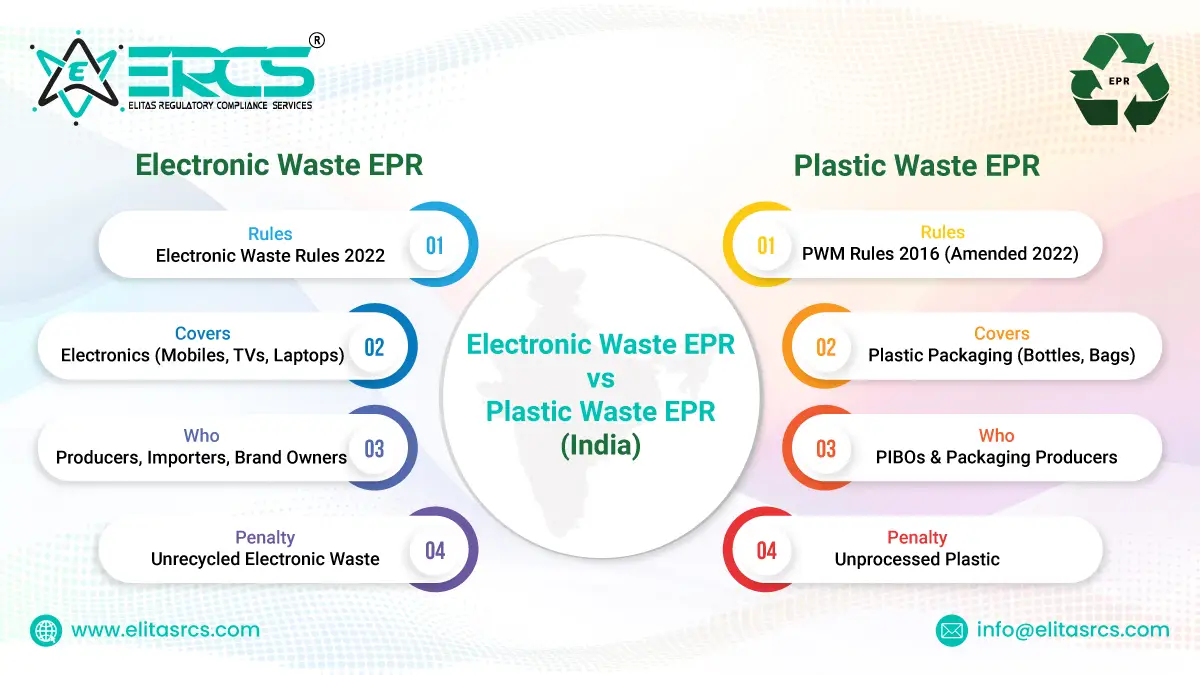
Know more about E-Waste EPR vs Plastic Waste EPR: What's the Difference
Who Needs to Comply with E-Waste Management?
The E-Waste Management Rules in India cast a wide net. If your business falls into any of the categories and deals with Schedule I products, you are legally required to register and fulfil annual obligations.
- Producers: The businesses that introduce Electronic and Electrical Equipment into the Indian market under their brand name or as manufacturers.
- Importers: This group consists of people/entities that import Electronic and Electrical Equipment or components of Electronic and Electrical Equipment into India for the purpose of selling them within India (or using them in India).
- Refurbishers: Industries by which they repair and resell used Electronic and Electrical Equipment.
- Authorised e-waste recycler/dismantler: This group refers to facilities that process e-waste at the end of its life.
- Bulk Consumers: Organisations (hospitals, Information Technology Companies (ITC), educational institutions, government agencies, etc.) that use large amounts of Electronic and Electrical Equipment.
- Dealers and E-retailers: They are required to provide collection and take-back facilities.
Penalties for Non-Compliance under Electronic Waste
If you are a manufacturer, importer or seller of electronic products in India and do not comply with the E-Waste Management Rules in India, then you may face a few serious legal and financial issues under the Environment Protection Act 1986
- Unmet Recycling Targets: Fines are assessed based on the quantities of e-waste collected/recycled in excess of the e-waste obligations.
- Monetary Fines: A direct financial penalty would range from ₹1 Lakh, depending on the degree of non-compliance and generally associated with the violation's size and severity.
- Suspension of EPR Authorisation: Immediate Suspension/cancellation of EPR authorisation for engaging in the activities of an EPR without a valid EPR Authorisation or using unregistered recyclers.
- Business Shutdowns & Blacklisting: A company found to violate environmental laws may be subject to closure orders. Additionally, manufacturers/importers may also be banned from producing/importing electronic products into the country.
- Platform Restrictions: Businesses that do not file, or have mismatched data, may be blocked from using Government eProcurement/Online Marketplace platforms.
- Legal Action/Imprisonment: In some extreme cases of willful neglect (or repeat violations of environmental laws), Business Owners/Managers are subject to legal prosecution; in rare cases of illegal activity, they may also face prison sentences of 5 years.
E-Waste Compliance Deadlines
The Mandatory E-Waste compliance in India requires strict adherence to the Central Pollution Control Board (CPCB) deadlines. This cycle operates on a financial year; you must meet the targets and file returns through the official portal.
- The deadline to file the Annual EPR Return (Form 3) on the CPCB Portal is 30th June 2026
- The deadline to submit the half-yearly return is 30th June 2026.
- Producers' target achievement is typically set at around 70% of previous sales and must be backed by valid EPR certificates.
Conclusion
The E-Waste Management Rules have significantly strengthened India's regulatory requirements, with a focus on Extended Producer Responsibility (EPR) and mandatory CPCB e-waste portal registration. Producers, importers, manufacturers, and recyclers are required to keep pace with regulatory changes, develop effective e-waste management systems, and remain compliant to avoid penalties and succeed in promoting a sustainable Circular Economy. Contact ERCS today to get assistance with your E-Waste Compliance journey through expert assistance from our team, as well as the ability to utilise our online compliance platform for your entire certification process.
FAQs
Q1. What are the rules for e-waste management 2016 vs 2022?
Ans. Under both the 2022 and 2016 Rules, the storage provisions state that e-waste can be stored for up to 180 days, and may be extended for up to 365 days. One major change in the 2022 Rules is the requirement that storage maintain records digitally on the EPR portal, shifting from a manual system to a more efficient one.
Q2. What is the process of E-waste Management?
Ans. The e-waste management process follows six core steps: collection, sorting, data destruction, manual dismantling, mechanical shredding, and material separation. This circular approach extracts precious metals like copper, gold, and aluminium for manufacturing.
Q3. What documents are required for E-waste management in India?
Ans. In general, the foundational documents required for registration through the CPCB EPR E-Waste Portal will include statutory, operational, and technical documentation.
Q4. Who must register on the centralised CPCB portal?
Ans. All entities that generate or manage designated types of waste under the Extended Producer Responsibility must register with the Central Pollution Control Board (CPCB) Portal.
Q5. What happens if a company fails to comply with the E-Waste certificate?
Ans. Failure to comply with E-Waste (EPR) regulations results in heavy financial fines, revocation of operating licenses, and bans on the sale or import of electronic products.

Anushka Pandey
Content Writer
She is an experienced content writer at ERCS Pvt. Ltd., an organization that assists companies with certification and regulatory support. She writes informative content on government certifications su... Read More »
Latest Blogs
Request A Quote
Need Expert Advice?
Need Expert Advice?
Feel Free to Connect with Us
Prompt reply within hours
Continued support
To give you the best compliance services in India, experienced BIS certification consultants at ERCS are ready to assist you at every stage of certification. Find out everything you need to know about the compliance your product requires to get into the Indian market and develop a trusted customer base.