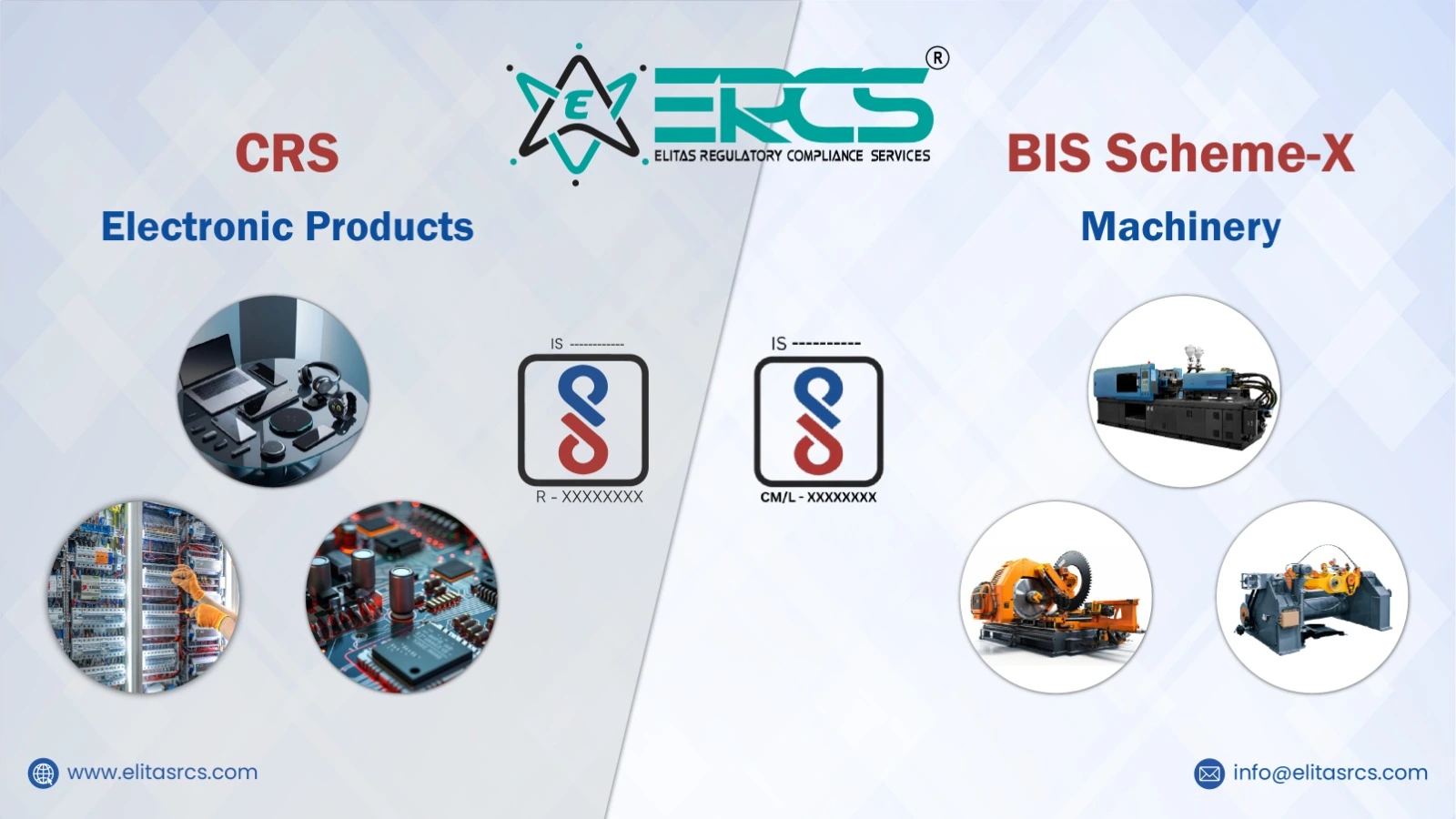
In India, most of the products must comply with certain specific BIS Certification provisions before they can be marketed to protect safety, reliability, and quality. Electrical equipment will require Compulsory Registration Scheme (CRS) certification if they are standard electronic and IT goods for general consumer use. Meanwhile, ‘OTR products’ (Omnibus Technical Regulation) require "Scheme X" Certification because they are heavier, high-risk industrial machinery and electric equipment that require more strict safety verifications. The difference is based on the type of product, possible risk, and the regulators' accountability to act in India.
It is important for manufacturers, importers, and brand owners to understand both the certification process and types. This directly affects testing, documentation, factory audits, and time spent getting products to market. This article will clarify why the Bureau of Indian Standards (BIS) has product categories in different schemes, what that means, and how to select the right certification in the Indian market.
Understanding BIS Certification in India: CRS vs Scheme X
The Compulsory Registration Scheme (CRS) and Scheme X are two different certification schemes at the Bureau of Indian Standards (BIS) in India. CRS is intended for generic electronic and IT products while Scheme X is designed to cover high risk industrial items of concern i.e. machinery, switchgear and other products which have safety implications; the two schemes differ significantly because CRS issues self-declaration certificates, products certified must be tested in one of the BIS recognised labs, and the responsibility to register the product lies with the manufacturer. BIS Scheme X licensing is undertaken by multiple steps, including factory inspection, testing batches, and testing the documentation is submitted which provides a greater amount of detail on the product and the processes of manufacturing involved. Both schemes have the same goal of ensuring conformity to Indian Standards (IS); however, there are some differences in levels of control and testing requirements.
Why Electrical and Electronic Appliances Fall Under the BIS CRS Scheme?
To ensure consumer safety and product quality in the Indian market, electrical and electronic equipment must be compliant with the Bureau of Indian Standards (BIS) Compulsory Registration Scheme (CRS). This is crucial as certain products — electric irons, refrigerators, mobile phones — that are not manufactured to strict safety standards can provide risks of electric shock or fire. Electrical and electronic products are produced in mass and frequently updated, making quick certification essential.
Let’s go through the pointers to know more:
- Electrical and electronic products are produced in mass quantities and updated frequently, making BIS CRS Registration essential.
- These products have no significant safety hazards related to electrical shock, overheating, or radiation.
- The CRS program establishes compliance through laboratory testing or self-declaration under certain circumstances, without factory inspection.
- The program is designed to be faster and less expensive, particularly for electronics that have a shorter product lifecycle.
- Product testing is conducted according to the relevant Indian Standards (IS) at laboratories registered and recognized with the Bureau of Indian Standards (BIS).
- Examples of common products covered under CRS requirements include LED-type lighting, mobile phones, adapters, laptop computers, and televisions.
- The BIS CRS Licensing Process establishes that all these types of regulations are safe, restrictions on energy efficiency by the Bureau of Indian Standards (BIS) in energy efficiency standards, and reliability for consumers in India.
Why OTR Products Require BIS Certification Under Scheme X
BIS Certification for OTR (Omnibus Technical Regulation) products will guarantee that imported industrial machinery or electrical equipment is safe, quality-assured, and reliable for the Indian market. Let’s go through the points to know more:
- OTR (Omnibus Technical Regulation) products must comply with particular Indian Standards (IS) in order to guarantee safety, performance, and reliability.
- These products are usually industrial, mechanical, or safety-critical - tyres, cables, switchgear, construction materials, etc.
- Scheme X (BIS Mark) through BIS is mandatory because OTR products can directly impact human safety or the structural integrity of a structure.
- This certification enables inspection of the factory, testing of the product, and evaluation of the quality system to ensure that the products continue to comply with the requirements of the applicable IS.
- The BIS then issues a License or Certificate of Conformity (CoC) to the manufacturer under Scheme X once conformity to the applicable IS has been established in full.
- Scheme X not only provides products that are nationally certified, but it also ensures ongoing, consistent quality control in the manufacturing process, which is unlike model-based registration under CRS.
- Product labelling with the BIS mark on these OTR products signifies their compliance with national safety and performance requirements, and protects the user as well as the environment.
How CRS Registration Differs from Scheme X Licensing?
Go through the table given below to know the key differences between CRS Registration and Scheme X Certification:
|
Feature |
CRS Registration (Scheme-II) |
Scheme X Licensing |
|
Purpose |
Ensures safety and quality of electronic and IT products |
Ensures safety, durability, and reliability of industrial and high-risk products |
|
Applicable Products |
Electrical and electronic appliances (e.g., LED TVs, mobile phones, adapters) |
Industrial, mechanical, or safety-critical items (e.g., OTR tyres, cement, switchgear) |
|
Regulatory Model |
Self-declaration based on third-party lab testing |
Factory licensing based on inspection, testing, and continuous monitoring |
|
Testing Requirement |
Product samples tested in BIS-recognized laboratories |
Factory and product samples tested as per the relevant Indian Standards |
|
Factory Inspection |
Not required |
Mandatory before granting a license |
|
Mark Used on Product |
BIS CRS Mark with registration number |
BIS Mark with license number |
|
Certificate Type |
BIS Registration Number (R-Number) |
BIS License Number (CM/L Number) or Certificate of Conformity (CoC) |
Impact of Product Certification on Manufacturers, Importers, and Indian Consumers
Certification of products is crucial for ascertaining safety, quality, and reliability for all stakeholders in the Indian market. For manufacturers, certification helps build brand trust and provides assurance of their product meeting the national standard, reducing the risk of non-compliance, rejected shipment, or recall.
For importers, having a product certified will facilitate customs clearance and entering the market in a hassle-free manner since the certified product by safety and performance level, is no different from those manufactured in India. For the consumer, the BIS certification- whether it is CRS or Scheme-X provides the consumer with a level of confidence in the product’s safety, durability, and authenticity, avoiding inferior and counterfeit goods.
Conclusion
Both the CRS Registration scheme and Scheme X (BIS Certification) fill critical gaps in product safety, quality, and consumer trust in India. The CRS scheme allows for faster model-based testing and compliance required for electrical and electronic appliances. However, OTR and industrial products must use Scheme X certification due to the higher safety and performance hazards they carry.
Recognising the differences between BIS Certification Schemes enables convoluted to select the appropriate one for compliance, market access, or to avoid compliance delays. In any case, choosing the right BIS scheme is not only a regulatory obligation, but it also shows commitment to providing quality, reliability, and consumer confidence in everything made and sold in India