WPC Certification for
Bluetooth Headphones
EN 300 328
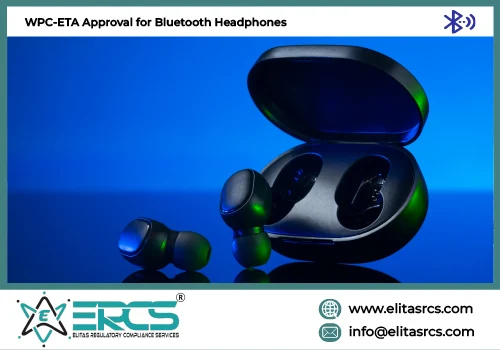
Bluetooth headphones operate on radio frequency (RF) bands, which means they fall squarely under the Wireless Planning and Coordination (WPC) Wing's regulatory net before they can legally be sold or imported into India. Whether you manufacture domestically or ship in from overseas, Equipment Type Approval (ETA) from the WPC is a mandatory prerequisite — skipping it can mean customs holds, product seizures, and denied import licenses. Here's what manufacturers and importers need to know.
Why Bluetooth Headphones Need WPC ETA
Bluetooth headphones transmit and receive signals over the 2.4 GHz ISM band. Any device that uses radio frequency spectrum in India must be certified to confirm it operates within permitted frequency and power limits, so it doesn't interfere with other licensed or unlicensed spectrum users. ETA is the WPC's formal confirmation that a wireless device meets these technical parameters and is cleared for sale and use in the country.
Who Applies: Foreign Manufacturer vs. Domestic Manufacturer
- Foreign Manufacturer (Applicant): A foreign brand that manufactures Bluetooth headphones outside India cannot apply for ETA directly. It must appoint an Authorized Indian Representative (AIR) to file and manage the application on its behalf. If the foreign manufacturer already operates a branch or liaison office in India, that entity itself can act as the AIR, eliminating the need for a separate third-party appointment.
- Domestic Manufacturer: An Indian manufacturer, by contrast, can apply for both the ETA certificate and the import license directly, with no AIR nomination required. This makes the domestic route comparatively faster and administratively simpler.
Documents Required for ETA Certificate
- Company Registration certificate or GST registration (for address verification)
- ID and address proof of the authorized person
- RF Test report from a foreign laboratory that is ISO 17025 accredited, or an Indian laboratory that is NABL accredited
- Authorization letter, if the person signing the application is not the CEO
- Product technical details (frequency band, power output, modulation type, and other RF specifications of the Bluetooth module)
For the Import License (post-ETA):
- ETA Certificate
- Purchase order
- Importer Exporter Code (IEC) Certificate
- Proforma Invoice
What Is an RF Test Report, and How Do You Get One?
An RF test report verifies that a device's radio transmissions stay within its designated frequency band and don't create harmful interference with other spectrum users. For Bluetooth headphones, this means confirming the 2.4 GHz module's transmit power, frequency stability, and spurious emissions all fall within permitted limits.
This report must come from a laboratory accredited under ILAC (for foreign labs, via ISO 17025) or NABL (for Indian labs). If a headphone model integrates more than one RF module instance, Bluetooth plus a separate NFC or wireless charging component test reports for every module must be submitted together as part of the ETA application; a single module's report isn't sufficient for multi-radio devices.
Step-by-Step ETA Approval Process
- Standard check and RF testing: Confirm the applicable EN/technical standard for the Bluetooth module and get it tested at an ILAC/NABL-accredited laboratory.
- Document preparation: Compile company registration, ID/address proof, the RF test report, authorization letter (if applicable), and full product technical specifications.
- Application filing: Submit the application through the WPC's online portal (Saral Sanchar).
- Fee payment: Pay the prescribed government fee online.
- Scrutiny by WPC: The WPC reviews the application and supporting documents for completeness and technical compliance.
- Grant of ETA Certificate: Once cleared, the WPC issues the Equipment Type Approval, after which the import license can be pursued using the ETA plus the purchase order, IEC certificate, and proforma invoice.
Get Expert Help with WPC ETA Certification
Navigating AIR appointment, lab coordination, and WPC portal filing can be time-consuming, especially for first-time applicants. ERCS assists both foreign and domestic Bluetooth headphone manufacturers with end-to-end WPC ETA certification from RF test lab coordination to AIR representation and import license documentation.