BIS Certification for
Electric Coffee Makers
IS 302 (Part 1/IEC 60335-1)
The BIS/ISI Mark certification is mandatory for Electric Coffee Makers in India as per the Safety of Household Commercial, and Similar Electrical Appliances (Quality Control) Order. All manufacturers and importers of IS 302 (Part 1): IEC 60335-1 must obtain the ISI Mark to legally sell in the Indian market. With the increasing popularity of energy-efficient, safe appliances like electric coffee makers, ensuring product quality and electrical safety has become increasingly important for manufacturers and importers alike. That is why a Bureau of Indian Standards Certification for Electric Coffee Makers under IS 302 (Part 1): IEC 60335-1 is important.
What are Electric Coffee Makers under IS 302 (Part 1)/IEC 60335-1?
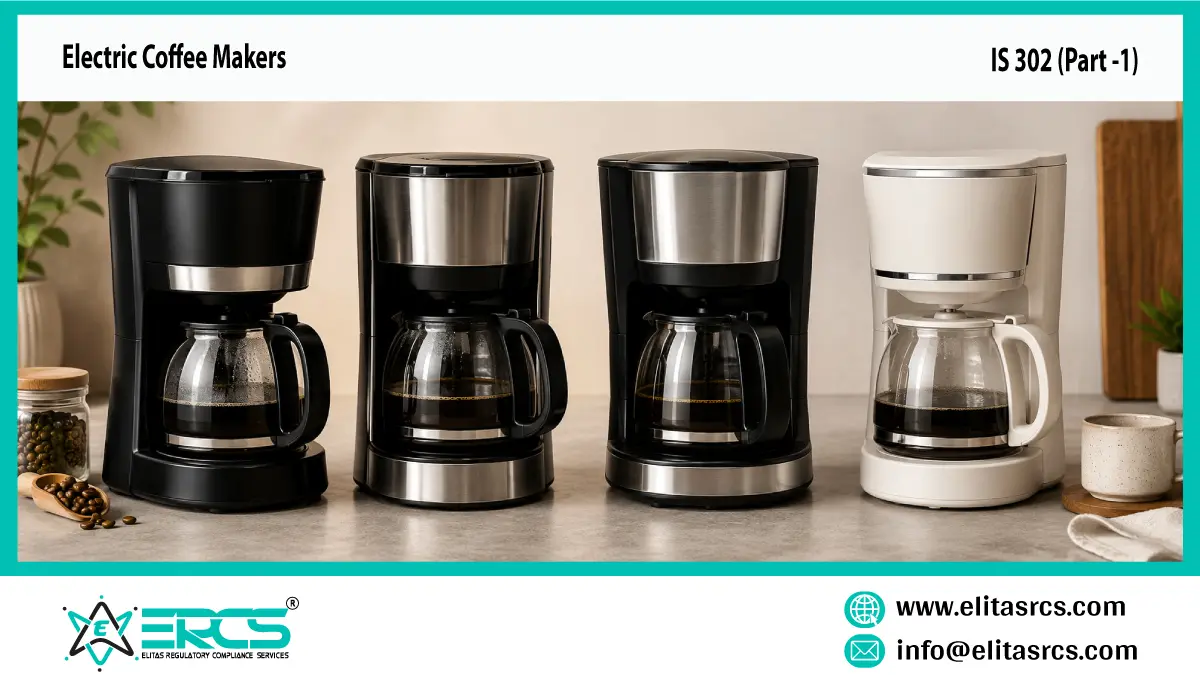
Electric Coffee Makers are electrical appliances that automatically brew coffee. These devices are designed to automate coffee preparation by eliminating the need to heat water, control the brewing temperature, and brew coffee in a timely and efficient manner. Modern electric coffee makers now offer programmable timers, automatic shut-off, temperature control, milk frothers, various brewing modes, and energy-efficient options.
According to IS 302 Part 1: IEC 60335-1, electric coffee makers are categorised as a household or similar appliance. These appliances should comply with stringent safety requirements for electrical insulation, mechanical strength, and heat resistance, and must meet the prescribed BIS standards.
Key Highlights for IS 302 (Part 1) for Electric Coffee Makers
The important specifications under IS 302 (Part 1): IEC 60335-1 are given below:
|
Mandatory Testing |
Tests are performed to determine whether an overcurrent device provides adequate protection against electric shock, heating effects and temperature rise. |
|
Safety and Structural Requirements |
These requirements include mechanical strength, durability, and resistance to abnormal operation. |
|
Applicability & Scope |
Applicable to electric coffee-makers, including domestic-use/portable (non-automatic), commercial, and table-top machines. |
|
Voltage Standards |
Applicable to appliances rated up to 250V, single phase and to appliances rated from 1 to 480V with AC and/or DC operation. |
|
Export and Import Rules |
Products without BIS certification are not permitted to enter the country. |
Key Benefits of ISI Mark Certification for Electric Coffee Makers in India
There are many advantages to acquiring the ISI Mark for Electric Coffee Makers manufactured or imported into India under IS 302 (Part 1): IEC 60335-1. Some of those advantages included:
- Licencing under BIS confirms that the electric coffee maker meets all electrical safety standards, thereby eliminating the risk of electric shock, overheating, short circuits, or fire.
- In addition to serving as proof of compliance with Indian Government requirements for electrical appliances, the certification gives consumers greater confidence.
- The absence of the ISI mark on an electrical appliance may result in lower acceptance among retailers, distributors, e-commerce platforms, and institutional buyers in India.
- Foreign manufacturers who wish to sell their products in India will typically need to obtain BIS certification and the required permissions/permits from Customs officials to enter and sell their products in the country.
Documents Required for BIS ISI Certification
The following items are the necessary documents required for obtaining Product Certification of Electric Coffee Makers:
- Completed Application Form (Application V)
- Proof of Address for Manufacturing Unit (e.g. Lease Agreement, Electricity bill).
- Factory Registration/Formation certificate (e.g. MSME/Partnership Deed)
- Details of the Product Specifications (drawings, components used, materials of manufacture).
- Detailed manufacturing process flow chart
- List of Raw Materials used, and certificates of conformance
- Identification document of Authorised Signatory and authorisation letter
- Quality Control Documentation and Inspection Procedures.
- Trademark Registration Certificate (if any)
- List of Machinery & Installed Capacity
- Testing Parameters for Electric Coffee Makers
Key parameters for testing appliances in IS 302 (Part 1)/IEC 60335-1 are listed below:
- Protection against electric shock: Protection against contact with live parts.
- Power input and current: The appliance cannot operate above its rated power level; tested at 1.15 times maximum input.
- Heating: The handle and external surfaces of the appliance may not exceed the maximum safe operating temperature during normal use.
- Abnormal operation: Testing the safety of the appliance when used under abnormal conditions.
- Moisture resistance: Test the insulation to ensure it remains intact during splashing or water leakage.
BIS Certification Fees and Timeline for Electric Coffee Makers 2026
Below, you can go through the table to get complete details about the BIS Certification cost of Electric Coffee Makers:
|
S No. |
Particular |
Amount (INR) |
Remarks |
|
1. |
Application Fee |
1000 |
To be paid directly to BIS |
|
2. |
Audit Fee |
7000 |
To be paid directly to BIS |
|
3. |
License Fee |
1000 |
To be paid directly to BIS |
|
4. |
Sample Testing Fee |
As Applicable |
To be paid directly to BIS (Testing charges vary from product to product and lab to lab.) |
|
5. |
Minimum Advance Marking Fee |
As per actual |
To be paid directly to BIS (Marking fee varies as per Indian Standard) |
|
6. |
Renewal Fee |
1000 |
To be paid directly to BIS |
|
7. |
Inclusion Fee |
5000 |
To be paid directly to BIS |
|
8. |
ERCS Pvt Ltd Service Fee |
Please contact info@elitasrcs.com |
|
The BIS licensing timeline depends on various factors, such as the product category, testing labs, factory location, and more.
- BIS Certification timeline for Indian Manufacturers: approximately 35-50 days
- BIS Certification timeline for Foreign Manufacturers: approximately 4-6 months
Step-by-Step BIS Certification Process for Electric Coffee Makers
There are a few steps you must go through to obtain BIS certification for Electric Coffee Makers under IS 302 (Part 1)/IEC 60335-1. Here's how to get product certification:
- Application Submission & Registration: All manufacturers must submit their documents and register on the BIS portal.
- Document Preparation: Prepare your documents in accordance with the Indian Standard and assemble all necessary documents to support your application.
- Factory Inspection: When BIS visits your factory, they verify your manufacturing capability and confirm compliance with the required Indian standards.
- Product Testing: The product samples are sent to an approved BIS laboratory for testing in accordance with IS 302 (Part 1)/IEC 60335-1 standards.
- Grant of BIS License: Upon successful completion of the above two steps, BIS will issue you a BIS License, which allows you to affix the ISI Mark to your product.
Both Indian and foreign manufacturers must follow the process to obtain BIS certification:
BIS Certification India for Indian Manufacturers
BIS FMCS Certification for Foreign Manufacturers
Who Needs ISI Mark Certification for Electric Coffee Makers in India?
The BIS ISI mark for electric coffee is crucial for machine manufacturers, importers, and sellers in India under the Safety of Household, Commercial, and Similar Electrical Appliances (Quality Control) Order.
- Domestic manufacture refers to any Indian company that manufactures coffee machines.
- Foreign manufacturing refers to any company that exports coffee machines to India.
- Importers are people who import coffee machines for resale in India.
- All brand owners and marketers are individuals selling coffee machines under their respective labels; distributors and retailers sell products at retail locations and distribute the items they sell.
How a BIS Consultant Helps Electric Coffee Maker Manufacturers
Obtaining BIS certification under IS 302 (Part 1): IEC 60335-1 involves multiple regulatory steps, document preparation, factory inspection, lab testing coordination, and license application on the BIS portal. A certified consultant manages each stage to reduce errors, avoid delays, and ensure the application meets current BIS requirements. ERCS Private Limited specialises in IS 302 (Part 1)/IEC 60335-1 compliance for both Indian and foreign manufacturers of electric coffee makers. Their services cover:
- Document preparation and application submission on the BIS portal
- Coordination with BIS-recognised testing laboratories for product sample testing
- Factory inspection support and compliance gap assessment
- End-to-end management from initial application to ISI Mark approval
- Dedicated support for foreign manufacturers navigating India's import and BIS licensing requirements
FAQs
Q1. What is the BIS for coffee machines?
Ans. The BIS Certification for Electric Coffee Makers ensures that your product complies with essential standards for electrical and fire safety as per IS 302 (Part 1)/IEC 60335-1.
Q2. Is BIS mandatory for Electric Coffee Makers?
Ans. Yes, BIS Certification is mandatory for Electrical coffee makers in India under the Quality Control Order (QCO) for household and similar electrical appliances.
Q3. BIS certification fee for electric coffee makers?
Ans. The BIS Certification cost for Electric Coffee Makers under IS 302 depends upon several factors, such as the number of models, factory location, and testing requirements.
Q4. Which specific standard applies to coffee makers?
Ans. The Electric Coffee Maker must comply with IS 302 (Part 1): 2024 or General Requirements and IS 302-2 for Particular Requirements.
Q5. Can foreign brands get BIS Certification for electric coffee makers?
Ans. Yes, foreign manufacturers can and must obtain BIS Certification to legally manufacture, import, or sell electric coffee makers in India.