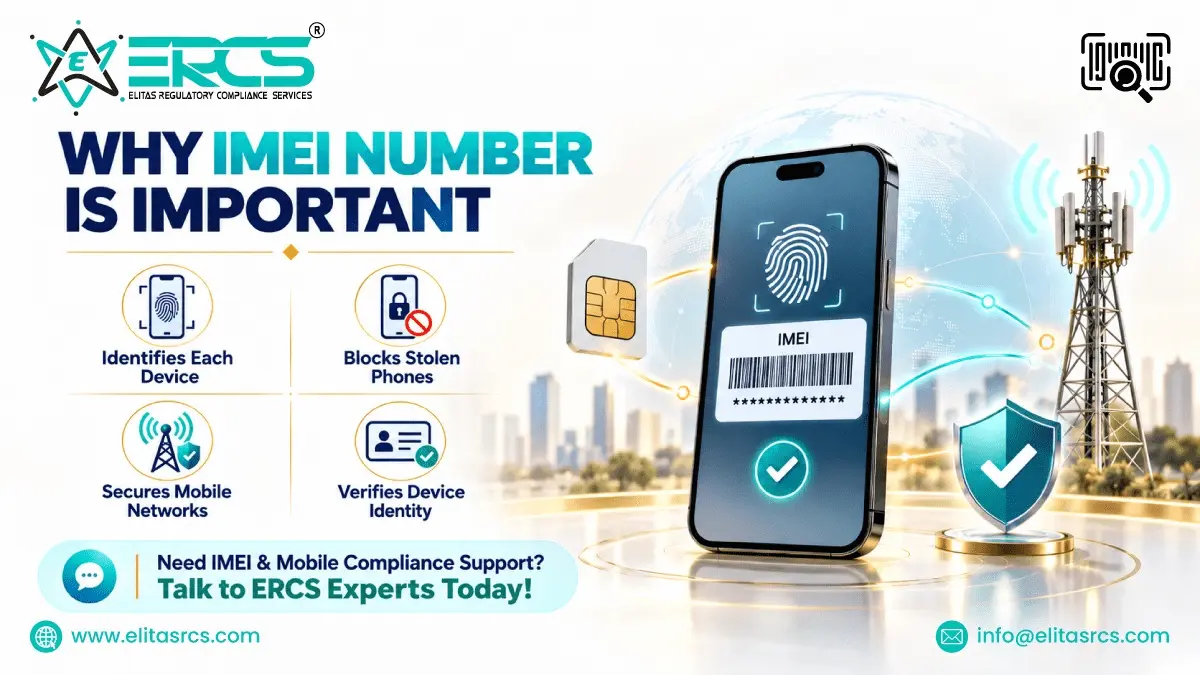
The International Mobile Equipment Identity (IMEI) number is a unique identifier assigned to a mobile phone. This article provides the information you need about the IMEI number, whether you are a consumer who wants to learn more about your mobile phone or an importer/manufacturer selling into the Indian market.
With the growing use of smartphones, connected devices, and wireless communication technology, IMEI number verification is essential for device identification and security. For manufacturers and importers, understanding IMEI-related requirements and India Telecom Regulations can help ensure regulatory compliance and market access.
What Is an IMEI Number?
An IMEI number is a unique 15-digit alphanumeric code for a mobile phone. It identifies a handset, not the subscriber, and helps networks identify, verify, and block the device. In India, it is also associated with the Central Equipment Identity Register (CEIR) and telecom regulations.
The first 8 digits of the 15-digit number make up the Type Allocation Code (TAC). They identify the phone model and its maker. The middle six digits are the manufacturer serial number, and the final digit is the check digit. The GSMA allocates the TAC.
If you lose your mobile device or it is stolen, you can register its IMEI number on the Sanchar Saathi website. The Central Equipment Identity Register (CEIR) will block it on Indian cellular networks and help trace it. The block applies only to Indian mobile networks and will not affect the phone's use on foreign networks.
Why Is the IMEI Number Important?
The IMEI number is used for many purposes in mobile device identification, security, and network management:
- Identifies Individual Mobile Devices: The IMEI number helps distinguish individual devices on cellular networks and lets network operators and other relevant parties identify specific devices when needed.
- Helps Prevent the Use of Stolen Devices: If a mobile phone is reported stolen, its IMEI number can help identify the device and, where supported, prevent it from using participating cellular networks. But blocking a device does not ensure it cannot be used on every cellular network and in every environment.
- Supports Mobile Network Security: Mobile network operators can access IMEI information to identify devices and manage their network. This helps them identify devices and adopt relevant security measures.
- Helps Verify Device Identity: Checking a mobile device's IMEI number can help consumers verify whether it is genuine by comparing it with the IMEI listed in the device settings, on the packaging, or on purchase documents. Consumers can compare the IMEI shown in the device settings with the one on the box and the invoice, and verify it through the Sanchar Saathi portal or the Know Your Mobile (KYM) feature.
Regulatory Compliance Requirement
The IMEI plays a crucial role in India's telecom regulatory framework. Manufacturers and importers must ensure each cellular phone has a properly programmed IMEI number.
How to Check the IMEI Number of a Mobile Phone
The IMEI number can be seen on a mobile phone in any of the following ways:
- Dial *#06#: Open the phone dialer and enter *#06#. The IMEI appears immediately.
- Check the settings: Go to Settings > About Phone (or Device Information) > Status.
- Check the packaging: The IMEI is usually printed on the box label.
- Check the invoice: Many purchase invoices list the IMEI.
- Check the SIM tray or back panel: Some devices print it there.
A phone with two SIM cards has two IMEI numbers. These two IMEIs correspond to each SIM card or modem installed in the device. If the phone supports eSIMs, it may display additional IMEIs.
What Is the Difference Between an IMEI Number and a Serial Number?
IMEI Numbers and serial numbers both identify devices, but they serve different purposes.
|
Basis |
IMEI Number |
Serial Number |
|
Primary purpose |
Identifies a mobile device for cellular network purposes |
Identifies a product within the manufacturer's product records |
|
Typical format |
15 digits |
Format varies by manufacturer |
|
Main use |
Device identification and network management |
Warranty, repairs, inventory, and manufacturer support |
|
Assignment |
Assigned according to applicable IMEI allocation and device implementation requirements |
Assigned by the manufacturer |
|
Applicability |
Commonly associated with cellular-capable devices |
Used across many types of electronic products |
What Should Manufacturers and Importers Know About IMEI Numbers?
Manufacturers and importers of IMEI numbers and their applications for mobile phones and other cellular-enabled products should understand that IMEI registration identification depends on the product category when preparing to comply with relevant regulations and enter the market.
According to the device category and the regulations, companies have to take into account the following issues:
- Device identification requirements: Ensure device identifiers are applied and recorded correctly.
- Applicable regulatory approvals: Understand which certifications, registrations, or approvals are required to enter the Indian market.
- Product traceability: Maintain accurate records on product and manufacturing where required.
- Import and market entry compliance: Check all necessary telecommunications and other regulations for the specific product category.
Note: The IMEI number does not take the place of mandatory certification or approval of products. A product with an IMEI number may still need MTCTE, WPC, or BIS certification to be legally marketed in India.
Conclusion
The IMEI number plays a very important role in identifying cellular mobile devices, managing the cellular network, and recovering lost phones. For manufacturers and importers, obtaining an IMEI number is just one requirement to sell their product in India. If you want to import or release a mobile phone in India, consult a compliance officer early.