India is an emerging economy with cutting-edge technologies and advancing in the digital revolution. Due to the global electronic revolution, the emergence and usage of electronic gadgets are at their peak.. The rising demand and usage of electrical and electronic equipment (EEE) lead to wear and tear and ultimately result in e-waste generation. Hence, EPR Registration is a statutory requirement for managing e-waste.
Let's dive into the future scope of EPR Registration in this blog.
What is E-Waste and EPR Registration?
E-Waste stands for electronic waste produced from thrown away electrical and electronic equipment that are no longer required. E-waste, or electronic garbage, has a serious impact on the environment and human lives. Hence, in 2022, the Government of India, under the Ministry of Environment, Forests, and Climate Change, issued the E-Waste Management Rules.
These rules mandate entities, such as manufacturers, producers, refurbishers, and recyclers, to register with EPR. Extended Producer Responsibility(EPR) is an obligatory requirement for entities and companies that produce, import, and sell electronic and electrical equipment(EEE) in India. It has so many benefits, including sustainable protection of the environment.
What are the effects of e-waste in India?
E-Waste impacts the environment, humans, and animals.
Impact on the environment:
- Air, water, and soil pollution- E-waste can contaminate the air, water, and soil due to the hazardous chemicals and materials like lead, mercury, and cadmium generated from it.
- Landfills and land degradation- E-waste can cause land degradation and landfills if not managed properly and timely manner.
- Generation of greenhouse gases- E-waste generated from a refrigerator releases hydrochlorofluorocarbons (HCFCs) and chlorofluorocarbons (CFCs), which are the major greenhouse gases.
Impact on the Humans:
- Detrimental Exposure: Workers employed in unregulated e-waste management units come in contact with toxic and hazardous materials.
- Cancer risks: Exposure to harmful materials generated from e-waste can cause many kinds of cancers.
- Skin problems: Coming in contact with hazardous substances can cause skin irritation and rashes.
- Respiratory problems: Inhaling harmful dusts and fumes can cause coughing fits, bronchitis, and wheezing.
Impact on Animals:
- Aquatic ecosystem: E-waste generated can affect aquatic life as the waste flows into the oceans and rivers, intoxicating the water and affecting the phytoplankton and zooplankton, and may cause eutrophication in water.
- Ingestion by birds and animals: Birds and animals ingest the hazardous materials, which causes their death and affects the ecosystem of flora and fauna.
- Disturbs Foodchain- As animals die unnaturally, it disturbs the food chain and later impacts other animals and nature.
- Affecting Biodiversity- The gradual loss of ecosystems affects humans, plants, animals, flora, fauna, water bodies, zooplanktons, phytoplanktons, air, soil, and whatnot. These contribute to affecting the biodiversity in total.
Key benefits of EPR registration for e-waste management:
There are many benefits like
- It helps in the conservation of the environment.
- It ensures lawful compliance.
- It helps in the protection of natural resources.
- EPR registration has many economic advantages.
- It can lead to escaping penalties.
- EPR registration holds and maintains data records.
- It promotes brand value.
- EPR registration for e-waste management has budget-friendly practices.
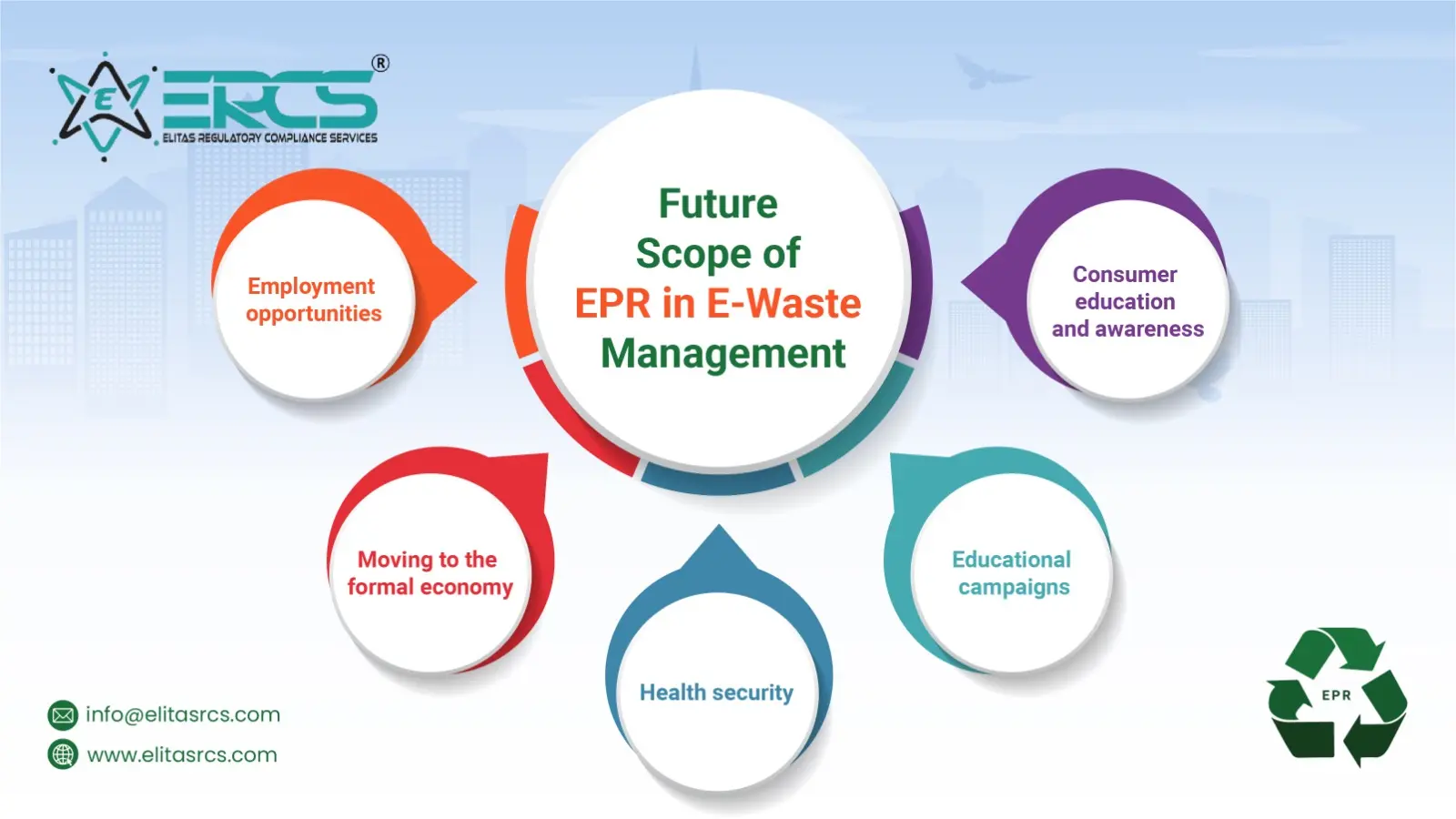
Future scope of EPR Registration for Electronic Waste
Let's discuss the future scope of EPR Registration for e-waste management.
Public Assistance:
- Employment opportunities: It generates employment opportunities in the management of e-waste duties, including recycling, collection, disassembly, and sorting of e-waste.
- Moving to the formal economy: It integrates the informal sector into the formal economy.
- Health security: e-waste management practices, such as recycling, can reduce the risk of potential health hazards and ensure security.
- Educational campaigns: To tackle the e-waste management issues, educational campaigns must be started to educate people about the proper disposal and management of e-waste.
- Consumer education and awareness: Consumers should be educated about the harmful effects e-waste can cause on their lives, animals, plants, and also can affect the environment. Awareness campaigns about the recycling process and effective disposal methods for electronic and electrical equipment EEE residues/debris should be launched for sustainable use and recycling.
Eco-friendly practices for environmental protection:
Preserving land and soil: E-waste management practices preserve landfills and ultimately soil.
- Limit air, water, and soil pollution: By stopping the disposal of e-waste directly into the environment, it helps to protect air quality, the natural ecosystem of water bodies, and wash off of toxic and hazardous materials into the environment, and ultimately protects human, animal, and plant lives.
- Minimises emission of greenhouse gases: E-waste managed properly can prevent certain greenhouse gases like carbon dioxide, methane, nitrous oxides, and fluorinated gases from being emitted and prevent global warming.
- Recovery from recycling: Recycling of e-waste can help in the recovery of valuable resources like copper, silver, and rare earth metals.
Economic benefits:
- Circular economy: As e-waste management practices involve recycling, reusing, and recovering of resources, which is a leading concept for the circular economy. It increases the lifespan of electrical and electronic equipment (EEE).
- Advanced recycling systems: Technology is integrated with recycling, hence the process of e-waste management is done efficiently and minimizes cost.
- AMR( Advanced Material Recovery): Innovation integration with technology and recycling can help in the recovery of advanced materials from complex waste streams, hence helping in sophisticated reclamation of resources/materials.
Proposals:
- Integrating AI: Artificial intelligence integration in recycling can improve the process, save time, and make it more effective.
- Waste-derived Energy: Waste-to-energy is a key future aspect of converting e-waste into energy production.
- Improving: EPR guidelines for e-waste management should be implemented to address sustainable practices for appropriate disposal and recycling.
- Audits for data collection: Regular inspection and audits should be done for data analysis of e-waste management and collection. It can enhance credibility and sustainable compliance.
Who issues an EPR registration license in India?
The Central Pollution Control Board(CPCB) is a government body that issues an EPR registration license in India.
How does the future scope of EPR registration for e-waste management hold value for the environment?
EPR registration for e-waste management holds a significant value and holds entities like producers, manufacturers, Refurbishers, and recyclers responsible for the disposal and maintenance of e-waste. It encourages certain sustainable practices, recycling mechanisms, and fosters a circular economy.
How does EPR registration fit into e-waste management for businesses?
Ans- EPR registration for e-waste management is a government policy and also helps businesses to meet Indian standards and regulatory requirements, builds brand value, demonstrates loyalty among consumers, helps to get access in new markets, even globally, and integrates innovations.
Conclusion:
India ranks among the top producer countries of e-waste. Hence, EPR registration for e-waste management is an effective way to address the environmental impact. It is the responsibility of the consumers as well to ensure sustainable compliance. Recycling infrastructure, implementing stricter EPR regulations, integration of technology and innovation with recycling, and environmentally friendly disposal practices can be effective and beneficial.
The future scope of EPR registration for e-waste management is at a turning point, demanding admirable endeavour and bearing hardships. For more details regarding the registration process and its future scope for e-waste management, kindly consult the best consultancy firm, ERCS Pvt Ltd.