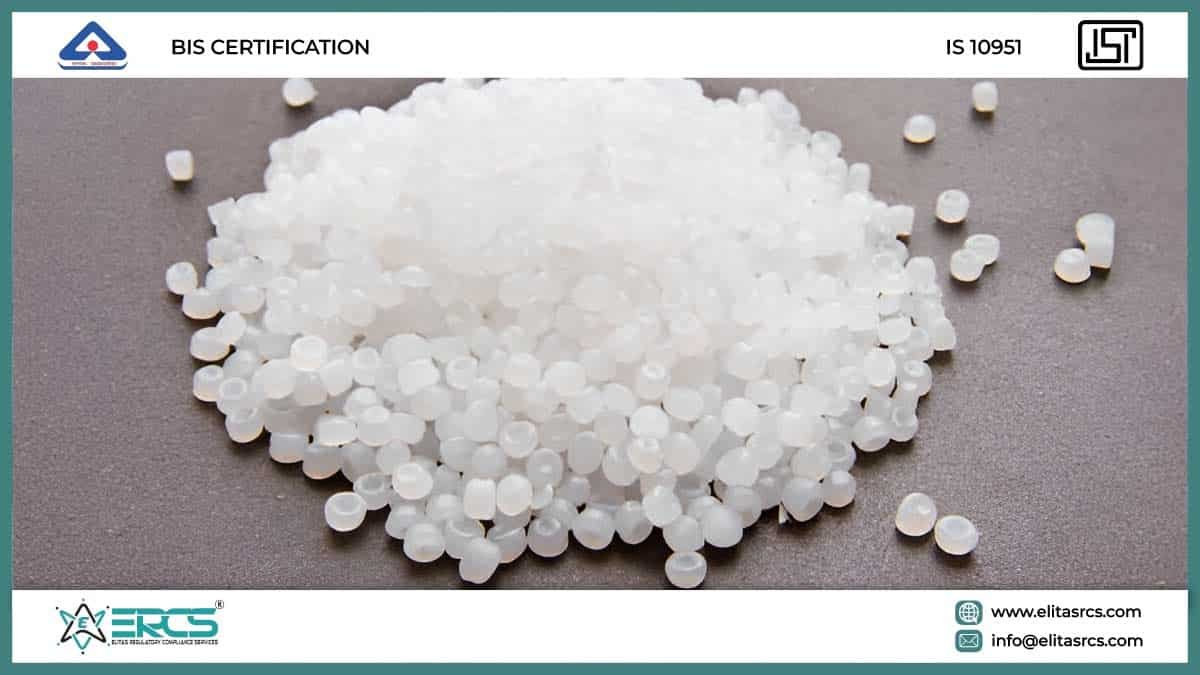
GET BIS CERTIFICATION FOR POLYPROPYLENE (PP) MATERIALS FOR MOULDING AND EXTRUSION
IS 10951:2020
Polypropylene (PP) is a thermoplastic “addition polymer” made from the combination of propylene monomers. It is used in a variety of applications to include packaging for consumer products, plastic parts for various industries including the automotive industry, special devices like living hinges, and textiles.
Molding or moulding is the process of manufacturing by shaping liquid or pliable raw material using a rigid frame called a mold or matrix.
Extrusion is a manufacturing process used to make pipes, hoses, drinking straws, curtain tracks, rods, and fibre. The granules melt into a liquid which is forced through a die, forming a long 'tube like' shape. The shape of the die determines the shape of the tube. The extrusion is then cooled and forms a solid shape. The tube may be printed upon, and cut at equal intervals. The pieces may be rolled for storage or packed together. Shapes that can result from extrusion include T-sections, U-sections, square sections, I-sections, L-sections and circular sections.
BIS is a statutory institution established under the Bureau of Indian Standards Act,1986 to promote harmonious development of the activities of standardization, marking and quality certification of goods and attending to connected matters in the country.
Polypropylene (PP) Materials for Moulding and Extrusion product has been specified in IS 10951:2020 by Bureau of Indian Standards.
SCOPE :
1. This standard prescribes the designation system, requirements, methods of sampling and tests for polypropylene (PP) thermoplastics material. It applies to the material ready for normal use in the form of powder, granules or pellets and to materials unmodified or modified by additives, fillers, etc.
2. This standard is applicable to all propylene homopolymers and to copolymers of propylene as prescribed in 3.3 and 3.4 (b) IS 16738.
3. It is not intended to imply that materials having the same designation give necessarily the same performance. This standard does not provide engineering data, performance data or data on processing conditions which may be required to specify a material for a particular application and/or method of processing.
If such additional properties are required, they shall be determined in accordance with the test methods specified in 6.3.2 if suitable.
4. This standard does not cover master batches.
REFERENCES :
The Indian standards listed in Annex A contain provisions which, through reference in this text, constitute provisions of the standard. At the time of publication, the editions indicated were valid. All standards are subject to revision, and parties to agreements based on this standard are encouraged to investigate the possibility of applying the most recent editions of the standards listed in Annex A.
TESTING PARAMETERS :
· Description
· Melt Mass flow rate
· Flexural Modulus
· Izod Impact Strength
· Tensile Yield Strength
· Elongation at Yield
· Tensile Strength at Break
· Elongation at Break
· Charpy Impact Strength
· Hardness –
o Rockwell, R
o Shore, D
· Melting Temperature
· Temperature of deflection under load
· Vicat Softening temperature
· Flammability
· Ignitability (Oxygen Index)
· Relative Permittivity
· Dissipation Factor
· Volume Resistivity
· Surface Resistivity
40) { header.classList.add('scrolled'); } else { header.classList.remove('scrolled'); } let winScroll = document.body.scrollTop || document.documentElement.scrollTop; let height = document.documentElement.scrollHeight - document.documentElement.clientHeight; let scrolled = (winScroll / height) * 100; progressBar.style.width = scrolled + "%"; }); // 1.b Hide Floating Button when Offcanvas opens const offcanvasForm = document.getElementById('expertFormOffcanvas'); const sideBtn = document.querySelector('.side-contact-btn'); if(offcanvasForm && sideBtn) { offcanvasForm.addEventListener('show.bs.offcanvas', () => { sideBtn.style.opacity = '0'; sideBtn.style.pointerEvents = 'none'; }); offcanvasForm.addEventListener('hidden.bs.offcanvas', () => { sideBtn.style.opacity = '1'; sideBtn.style.pointerEvents = 'auto'; }); } // 2. Dynamic ToC Generation (Replaces hardcoded HTML) const articleContainer = document.querySelector('.article-content'); const desktopTocContainer = document.getElementById('toc-nav'); const mobileTocContainer = document.querySelector('.mobile-toc-nav'); if (articleContainer) { // Find the intro div and all h2/h3 elements const headings = articleContainer.querySelectorAll('#section-intro, h2, h3'); if (desktopTocContainer) desktopTocContainer.innerHTML = ''; if (mobileTocContainer) mobileTocContainer.innerHTML = ''; headings.forEach((heading) => { // Auto-generate ID if missing if (!heading.id) { heading.id = heading.textContent.trim().toLowerCase().replace(/[^a-z0-9]+/g, '-'); } // Create Desktop Link (direct to match your CSS) const desktopLink = document.createElement('a'); desktopLink.href = `#${heading.id}`; desktopLink.textContent = heading.id === 'section-intro' ? 'Introduction' : heading.textContent; desktopLink.className = 'toc-link'; // Indent h3 tags for nested visual hierarchy if (heading.tagName.toLowerCase() === 'h3') { desktopLink.style.paddingLeft = '30px'; desktopLink.style.fontSize = '12.5px'; } if (desktopTocContainer) desktopTocContainer.appendChild(desktopLink); // Create Mobile Offcanvas Link const mobileLink = document.createElement('a'); mobileLink.href = `#${heading.id}`; mobileLink.textContent = desktopLink.textContent; mobileLink.className = 'toc-link text-decoration-none text-dark'; mobileLink.setAttribute('data-bs-dismiss', 'offcanvas'); if (heading.tagName.toLowerCase() === 'h3') { mobileLink.style.paddingLeft = '30px'; mobileLink.style.fontSize = '14px'; } if (mobileTocContainer) mobileTocContainer.appendChild(mobileLink); }); } // 3. Smooth Scrolling for ToC Links document.querySelectorAll('.toc-link').forEach(anchor => { anchor.addEventListener('click', function (e) { if(this.getAttribute('href').startsWith('#')) { e.preventDefault(); const targetId = this.getAttribute('href'); const targetElement = document.querySelector(targetId); if(targetElement){ const headerOffset = 100; const elementPosition = targetElement.getBoundingClientRect().top; const offsetPosition = elementPosition + window.pageYOffset - headerOffset; window.scrollTo({ top: offsetPosition, behavior: "smooth" }); } } }); }); // 4. Intersection Observer for the "Soft Pill" Active State const sections = document.querySelectorAll('.article-content h2, .article-content h3, #section-intro'); const navLinks = document.querySelectorAll('.toc-aside .toc-link'); const navContainer = document.getElementById('toc-nav'); const observerOptions = { root: null, rootMargin: '-120px 0px -60% 0px', threshold: 0 }; const observer = new IntersectionObserver((entries) => { entries.forEach(entry => { if (entry.isIntersecting) { navLinks.forEach(link => link.classList.remove('active')); const activeId = entry.target.getAttribute('id'); const activeLink = document.querySelector(`.toc-aside .toc-link[href="#${activeId}"]`); if (activeLink) { activeLink.classList.add('active'); // Move the pseudo-element pill highlight const linkRect = activeLink.getBoundingClientRect(); const containerRect = navContainer.getBoundingClientRect(); const relativeTop = linkRect.top - containerRect.top; navContainer.style.setProperty('--pill-top', `${relativeTop}px`); navContainer.style.setProperty('--pill-height', `${linkRect.height}px`); navContainer.style.setProperty('--pill-opacity', `1`); } } }); }, observerOptions); sections.forEach(section => observer.observe(section)); // Initialize pill on load setTimeout(() => { const firstLink = navLinks[0]; if(firstLink) { firstLink.classList.add('active'); const linkRect = firstLink.getBoundingClientRect(); const containerRect = navContainer.getBoundingClientRect(); navContainer.style.setProperty('--pill-top', `${linkRect.top - containerRect.top}px`); navContainer.style.setProperty('--pill-height', `${linkRect.height}px`); navContainer.style.setProperty('--pill-opacity', `1`); } }, 100); });