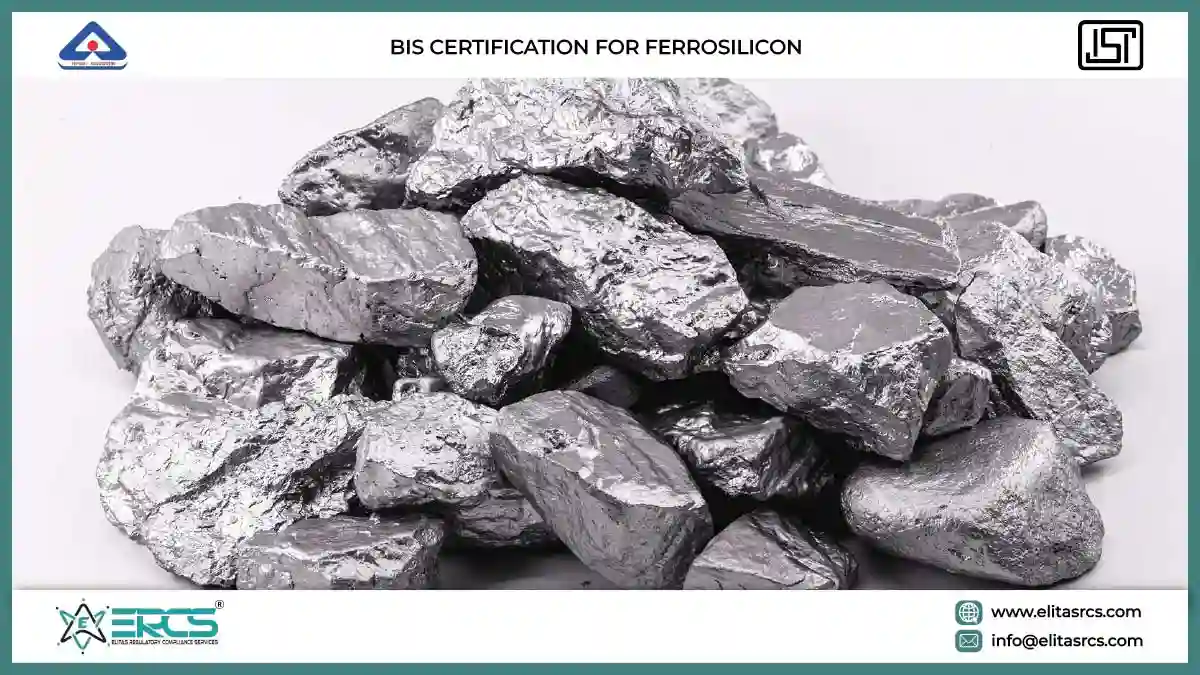
Commercially, Fe-Si is differentiated by its grade and size. Fe-Si grades are defined by the percentages of Si and minor elements contained in the product. The principal characteristic is the percentage of Si contained in the ferro-alloy and the grades are referred to primarily by reference to that percentage. Hence 75 % Fe-Si contains around 75 % of Si in it.
Fe-Si grades are further defined by the percentages of minor elements present in the product. ‘Regular grade 75 % Fe-Si’ denote that the product containing the indicated percentages of Si and recognized maximum percentages of minor elements. Other grades of Fe-Si differ from regular grades by having more restrictive limits on the content of elements such as Al, titanium (Ti), and/or Ca in the ferro-alloy.
Fe-Si is also produced in a grade that contains controlled amounts of minor elements for the purpose of adding them to steel or foundry iron using Fe-Si as the carrier. Such Fe-Si products are sometimes called ‘inoculants’.
Commercial-grade of Fe-Si with Si content of 15 % is generally produced in the blast furnace (BF) lined with acidic fire bricks. Fe-Si with higher Si content is normally produced in SAF. Fe-Si is produced industrially by carbo-thermic reduction of silicon dioxide (SiO2) with C. It is produced by smelting Fe containing materials and Si containing materials. Fe is in the form of iron ore, iron or steel scrap, or mill scale and Si is normally in the form of quartzite lumps.
These are combined with carbonaceous material such as coal or petroleum coke and a bulking agent such as wood chips. Quartzite is the source for Si in this carbothermic process. The smelting of Fe-Si is a continuous process carried out in the electric submerged arc furnace (SAF) with the self-baking electrodes.
The following are the important Grade Designations :
• FeSi93
• FeSi88
• FeSi83
• FeSi78
• FeSi76A101
• FeSi73A105
• FeSi73A115
• FeSi73A125
• FeSi65
• FeSi48
• FeSi20P15
Applications :
• As a source of silicon for the reduction of metals from their oxides and for the de-oxidation of steel and other iron alloys.
• Production of other ferroalloys.
• Production of silicon, corrosion-resistant and high-temperature ferro-silicon alloys and silicon steel for electric motors and transformer cores.
• In cast iron production, ferrosilicon is used to seed iron to accelerate graphitization.
• Production of prealloys such as magnesium ferrosilicon, used for the treatment of molten malleable cast iron.
• As an additive to cast iron to control the initial silicon content.
• In the steel smelting, casting, mineral processing, and melting rod industries.
• It is used in the Pidgeon process to make magnesium from dolomite.
• For separation and atomization of heavy media.
• It is used in casting, smelting, and related metallurgical industries.
• For the production of pure silicon semiconductor in the electrical industry and silicon copper in the chemical industry.
Following are the Testing Parameters :
Chemical Composition :
• Carbon
• Silicon
• Sulphur
• Phosphorus
• Aluminium
• Calcium
• Manganese
• Boron
• Zirconium
• Titanium
Size
Extraneous Contamination
Possible Tests in a Day :
• Size designation
• Extraneous contamination
• Carbon & Sulphur by chemical method, all required elements by instrumental Method
BIS Certification in India
BIS is the National Standards Body of India, which develops and publishes Indian Standards, implements Conformity Assessment Schemes, recognizes and runs laboratories for Conformity assessment, implements hallmarking, works for consumer empowerment, conducts capacity-building programs on quality assurance, and represents the country in ISO and IEC.
Applicants have to set up the lab (complete testing facility) in their factory premises. Once everything is ready, then we need to submit the application along with complete testing facility details with calibration and other supporting documents to the Bureau of Indian Standard (BIS).
After the scrutiny of documents, a BIS officer will visit the factory to check in-house testing facilities and manufacturing machinery according to the process flow chart. During the inspection, the manufacturer has to offer a sample lot, and after the successful completion, the Inspection BIS officer will seal the sample for testing in the independent lab.
After the satisfactory report is received from the lab, BIS will issue the license.
It is always better to consult with an experienced team such as ERCS Pvt. Ltd. for a smooth certification process.
For more information, please feel free to contact us at info@elitasrcs.com or call at +91-9076611770 / +91-9076611766.